Stops secondary damage
Closing the opening prevents additional rain intrusion, wind damage, interior water damage, and the mold growth that follows repeated wetting.
Temporary Repairs · Kansas City Metro
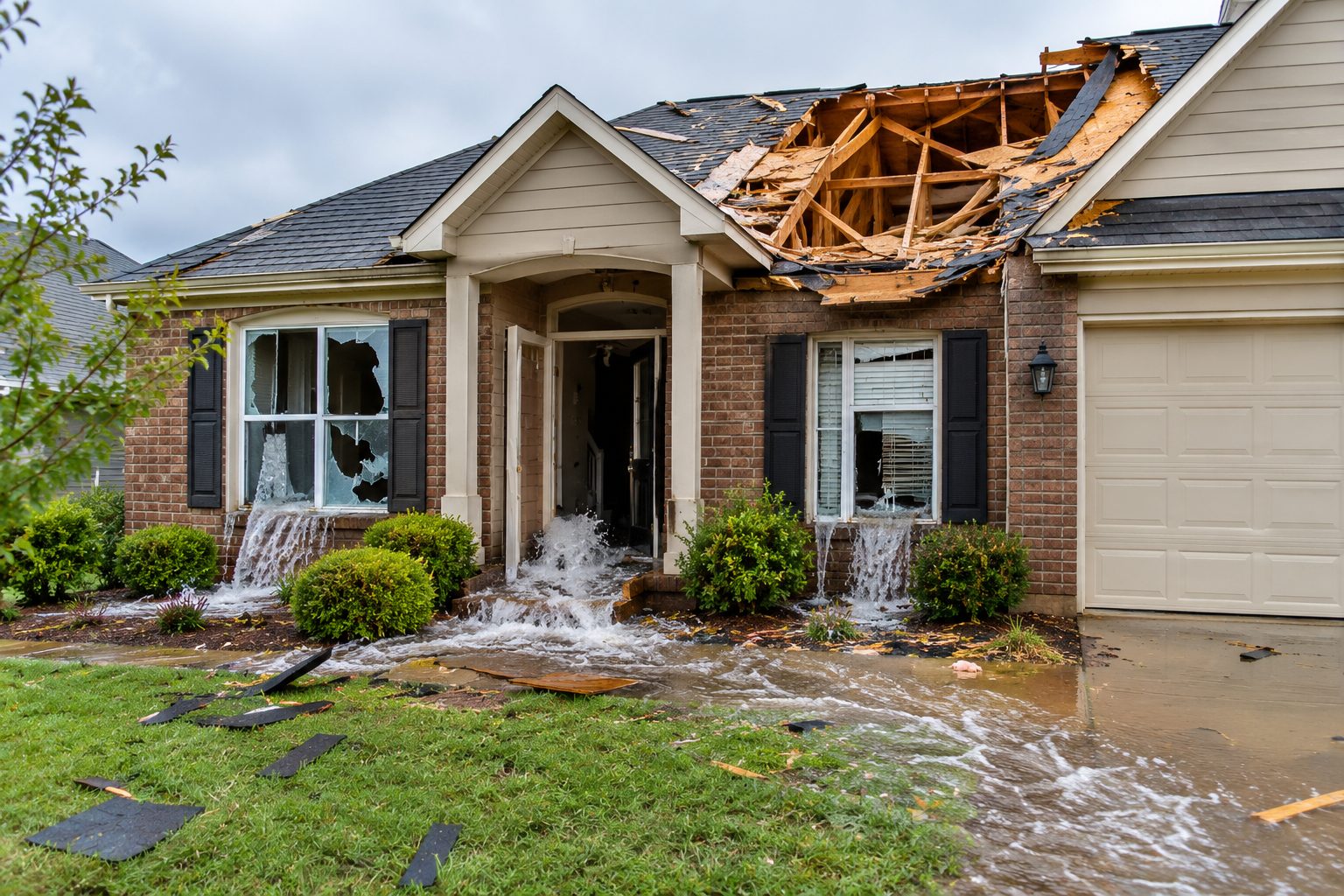
When a storm opens your roof, a window is broken out, or fire or vehicle impact leaves a building exposed, the damage keeps growing until the opening is closed. Dry Out Pros provides 24/7 emergency board-up, roof tarping, and temporary repairs across the Kansas City metro to secure your property and stop additional loss.
Why it matters
An open roof or broken window is not a cosmetic problem. Every hour a building stays exposed, rain, wind, animals, and unauthorized entry add new damage that may be treated separately from the original loss.
Closing the opening prevents additional rain intrusion, wind damage, interior water damage, and the mold growth that follows repeated wetting.
An open building is an invitation for theft, vandalism, and injury. Board-up limits access and reduces your liability exposure while repairs are pending.
Most property policies place a duty on the owner to protect the property from further damage. Prompt, documented emergency repairs help demonstrate that duty was met.
Service 01
After hail, high wind, a fallen tree limb, or fire department access cuts, an exposed roof deck lets water straight into the attic, insulation, ceilings, and walls below. A properly installed emergency tarp buys the building time until permanent roofing work can be scheduled.
If water has already reached the interior, roof tarping pairs directly with our structural drying services so the building is both closed up and dried out.
Service 02
Broken windows, forced doors, storm-blown openings, and vehicle impact all leave a structure open to weather and entry. We close those openings with properly fastened, appropriately sized material.
Service 03
Not every emergency is a tarp or a sheet of plywood. Securing a damaged property sometimes takes a few more measures before permanent repairs can begin.
Heat-applied structural wrap for large or irregular roof areas where conventional tarping will not hold.
Site perimeter control to keep the public away from unsafe structures and debris fields.
Clearing fallen limbs, damaged material, and hazards blocking safe access to the building.
Portable power and equipment where utilities are down but drying still needs to start.
Protecting exposed plumbing in unheated damaged buildings to prevent a second freeze loss.
Covering or relocating contents in place so they are not damaged further during the exposure period.
Insurance
Most homeowners and commercial property policies include language requiring the insured to take reasonable emergency measures to protect covered property from further damage after a loss. Because of that, reasonable emergency mitigation costs, including board-up and tarping, are frequently addressed as part of the claim rather than treated as an out-of-pocket improvement.
Coverage always depends on your specific policy, the cause of loss, applicable deductibles, and the facts of the claim, so nothing here should be read as a coverage determination. What we can control is the quality of the documentation supporting it.
Emergency mitigation is generally expected to happen before an adjuster inspection, not after. Photograph the damage yourself if you safely can, then call for board-up. Waiting several days for an inspection while a roof stays open usually makes the loss larger, not easier to resolve.
Emergency board-up and tarping are temporary by design. They are meant to hold the building until a roofing contractor, glazier, or general contractor can complete permanent repairs. We coordinate with whoever is handling that work so the temporary measures come off at the right time and the documentation transfers cleanly into the repair scope.
Our process
Tell us what is open, how it happened, and whether anyone is on site.
We evaluate structural stability and access before anyone goes up or inside.
Tarp, board, or wrap installed to hold against weather and entry.
Before and after photos plus a written scope you can hand to your carrier.
Service area
We dispatch emergency board-up and tarping crews throughout the Kansas City area and surrounding communities in Kansas and Missouri, including Overland Park, Olathe, Lenexa, Shawnee, Lee's Summit, Independence, Blue Springs, Liberty, Kansas City KS, Leavenworth, Lawrence, and Topeka.
Questions people actually ask
Emergency calls come in fast and confused. These are the questions that come up most.
Get everyone out of the affected rooms and stay clear of anything sagging. If it is safe, photograph the damage from the ground. Then call for emergency tarping. A tree penetration usually means both an open roof and interior water damage, so extraction and drying typically start on the same visit as the tarp.
Yes. Commercial storefront board-up is one of the most common emergency calls we take, and we dispatch 24 hours a day across the Kansas City metro. We secure the opening, document it for your claim and any police report, and coordinate timing with your glazier for permanent replacement.
A properly installed, battened tarp is generally a short-term measure meant to hold for weeks, not months. Sun and wind degrade poly over time. It buys you the room to get a roofing contractor scheduled and a claim moving without water pouring into the building in the meantime.
Most property policies place a duty on the owner to protect the property from further damage after a loss, and reasonable emergency measures like board-up and tarping are frequently addressed within the claim. Coverage depends on your specific policy and the facts of the loss. We document the emergency condition, the work performed, and the materials used so the cost is supportable.
Generally no. Emergency mitigation is normally expected to happen before an inspection, not after. Photograph the damage yourself if you safely can, then get the building closed up. Leaving a roof open for several days waiting on an adjuster almost always makes the loss bigger.
Storm damage, fire, break-in, or vehicle impact: we dispatch 24/7 across the Kansas City metro to secure the property and document it for your claim.
24/7 Emergency Response
Tell us what happened, where the property is located, and how urgent it is. For active water damage, call first so response can begin faster.