Xactimate & Cotality IICRC S500 aligned Daily moisture logs Photo-documented scope

For Agents, Adjusters, Carriers & TPAs

Water Mitigation Built for the Claims Process

Most mitigation disputes are not really about drying. They are about a file that cannot support the invoice. Dry Out Pros is run by people who have spent two decades on both sides of that conversation, and we scope, document, and dry accordingly.

A defensible file protects everyone

An overscoped mitigation invoice costs the carrier. An underdocumented one costs the insured. Both cost the agent a relationship, and both land on the adjuster's desk as a problem to resolve rather than a file to close.

Our position is straightforward: dry what is wet, document why, and stop when the readings say stop. That produces invoices that reconcile, files that close, and policyholders who do not end up in a dispute they did not sign up for.

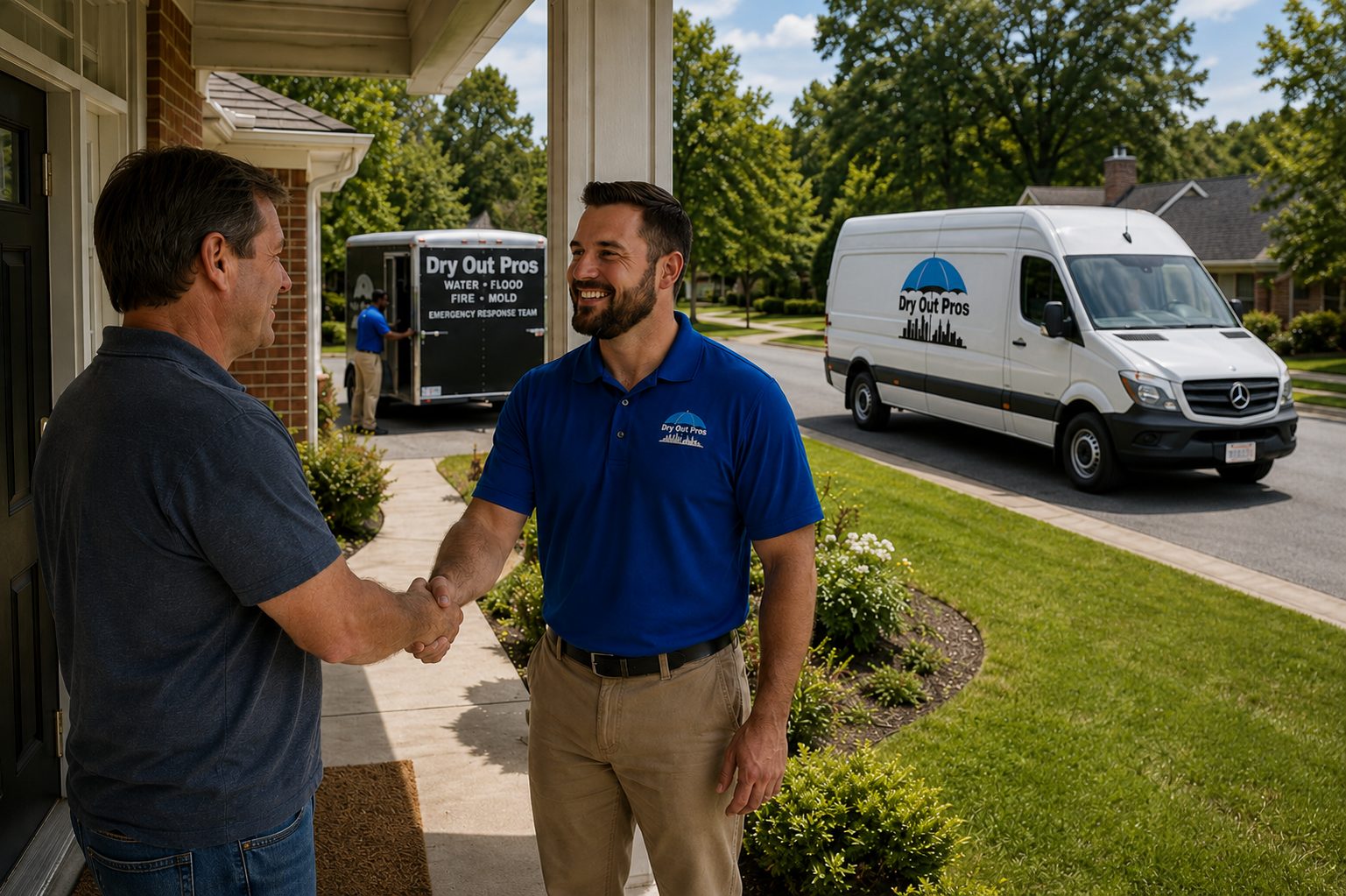
Dry Out Pros representative meeting with a policyholder at the start of a water damage claim

What lands in the file on every job

Not a folder of blurry phone pictures. A structured record that answers the questions before they are asked.

Initial loss documentation

  • Date and time of first notice and arrival
  • Water source and category determination with rationale
  • Class of loss and affected square footage by room
  • Moisture map of affected and unaffected materials
  • Pre-existing condition notes where relevant
  • Photo set keyed to rooms and elevations

Ongoing drying documentation

  • Daily material moisture content readings
  • Daily psychrometric readings, affected and unaffected
  • Equipment type, count, and placement by room
  • Dry standard established from unaffected materials
  • Justification for any extended drying days
  • Drying certificate and final readings at completion

Estimating platforms

We scope in Xactimate and Cotality (formerly Symbility), using standard line items and the pricing basis your file requires. If your carrier or program has a preferred scoping convention or price list, tell us up front and we will build to it rather than sending something that has to be rewritten.

Different seats, different needs

Insurance agents

Your client just called you before they called anyone else, and how the next hour goes reflects on you. Refer them to a vendor that shows up, explains things in plain language, and does not turn a covered loss into a fight. We keep you copied on what is happening.

Independent & staff adjusters

You need a mitigation file you can reconcile without three rounds of follow-up. Clear category and class calls, readings that justify the equipment, and a scope that matches what was actually done.

Carriers & TPAs

Program-compliant scoping, documented drying justification, and predictable invoicing. We are set up to work within managed repair and TPA program requirements where the fit is right.

Public adjusters

Thorough, standards-based documentation of the full extent of moisture intrusion, including the hidden damage that gets missed on a quick walkthrough.

Attorneys & experts

When a loss is headed toward dispute, contemporaneous readings and dated photo documentation are worth far more than a recollection months later.

Policyholders

The person actually living through it. We explain what is wet, what is coming out, why the equipment is loud, and what their carrier is likely to ask for.

How we decide what comes out and what stays

The single biggest driver of mitigation cost disputes is material removal. Our approach follows recognized restoration industry standards for water damage restoration and applied structural drying, and the decision tree is consistent:

Category drives salvageability

  • Category 1: clean water from a sanitary source. Most materials are candidates for in-place drying where readings support it.
  • Category 2: significant contamination. Porous materials are evaluated individually rather than removed by default.
  • Category 3: grossly contaminated. Affected porous materials are removed, and that removal is documented with the contamination rationale.

Readings drive duration

Equipment stays until affected materials reach the dry standard established from comparable unaffected materials in the same structure, and comes out when they do. Extended drying days get a documented reason, not an assumption.

What we will tell you plainly

If a loss does not need what someone else scoped, we will say so. If hidden moisture makes a loss larger than it first appeared, we will document it before we expand scope, not after. Neither conversation is comfortable, and both are cheaper than the alternative.

Emergency board-up on the same file

When a loss involves an open building, our emergency board-up and roof tarping is documented on the same file with the same standard, so emergency mitigation and drying reconcile together rather than arriving as two unrelated invoices.
How to hand us a claim

1

Call or send it

Insured name, loss address, claim number if open, and the reported cause of loss.

2

We contact the insured

Usually within the hour, and we confirm back to you that contact was made.

3

Scope & document

Category, class, moisture map, and initial scope delivered in your preferred format.

4

Close it cleanly

Final readings, drying certificate, and a reconciled invoice that matches the file.

What agents and adjusters ask us

The questions that come up before a first referral.

Yes. Call 1-888-379-6880 (or 816-379-6887) or send the loss details and we will contact the insured, usually within the hour, and confirm back to you that contact was made. Agents get kept in the loop rather than finding out how it went from the client afterward.

Both. If your carrier or program has a preferred scoping convention or price list, tell us up front and we will build to it rather than sending something that has to be rewritten on your end.

With readings, not assertions. Every additional day is supported by daily material moisture content and psychrometric logs showing the affected materials had not yet reached the dry standard established from unaffected materials in the same structure. If the readings do not support another day, the equipment comes out.

We will say so plainly and show the readings behind our opinion. Our position is to dry what is wet, document why, and stop when the readings say stop. That is a less comfortable conversation than agreeing with everyone, and it is considerably cheaper than a dispute.

Refer a loss, or set us up as an approved vendor.

We can provide COI, W-9, certification documentation, and references for your vendor file before the next claim comes in.

Request water damage help

Tell us what happened, where the property is located, and how urgent it is. For active water damage, call first so response can begin faster.

Water still running or actively spreading? Call 1-888-379-6880 or (816) 379-6887 now instead of waiting on a form reply.
  • Free, no-obligation assessment
  • IICRC WRT & ASD certified drying
  • Insurance claim-ready documentation

By submitting this form, you agree to be contacted by Dry Out Pros about your request.