
One number, any hour
Water loss, sewage backup, storm damage, or a building left open: the same line handles all of it, 24/7/365, including nights, weekends, and holidays.
For Property Managers, Owners & Facility Teams
A water loss in a managed property is not just a repair. It is displaced residents, a disrupted tenant, an owner asking questions, and a claim that has to be defensible. Dry Out Pros works as a dedicated emergency response vendor for property management companies, HOAs, and commercial owners across the Kansas City metro.
The property manager problem
Most managers do not have time to coordinate an extraction crew, a drying vendor, a board-up contractor, and a documentation trail across three different phone numbers at 2 a.m. We consolidate that.
Water loss, sewage backup, storm damage, or a building left open: the same line handles all of it, 24/7/365, including nights, weekends, and holidays.
Readings, photos, and scope tracked by unit and by building, not lumped into one job file, so cost allocation, chargebacks, and owner reporting actually work.
Uniformed, insured, background-conscious technicians who understand they are working in someone's home and that you will hear about it if they do not.
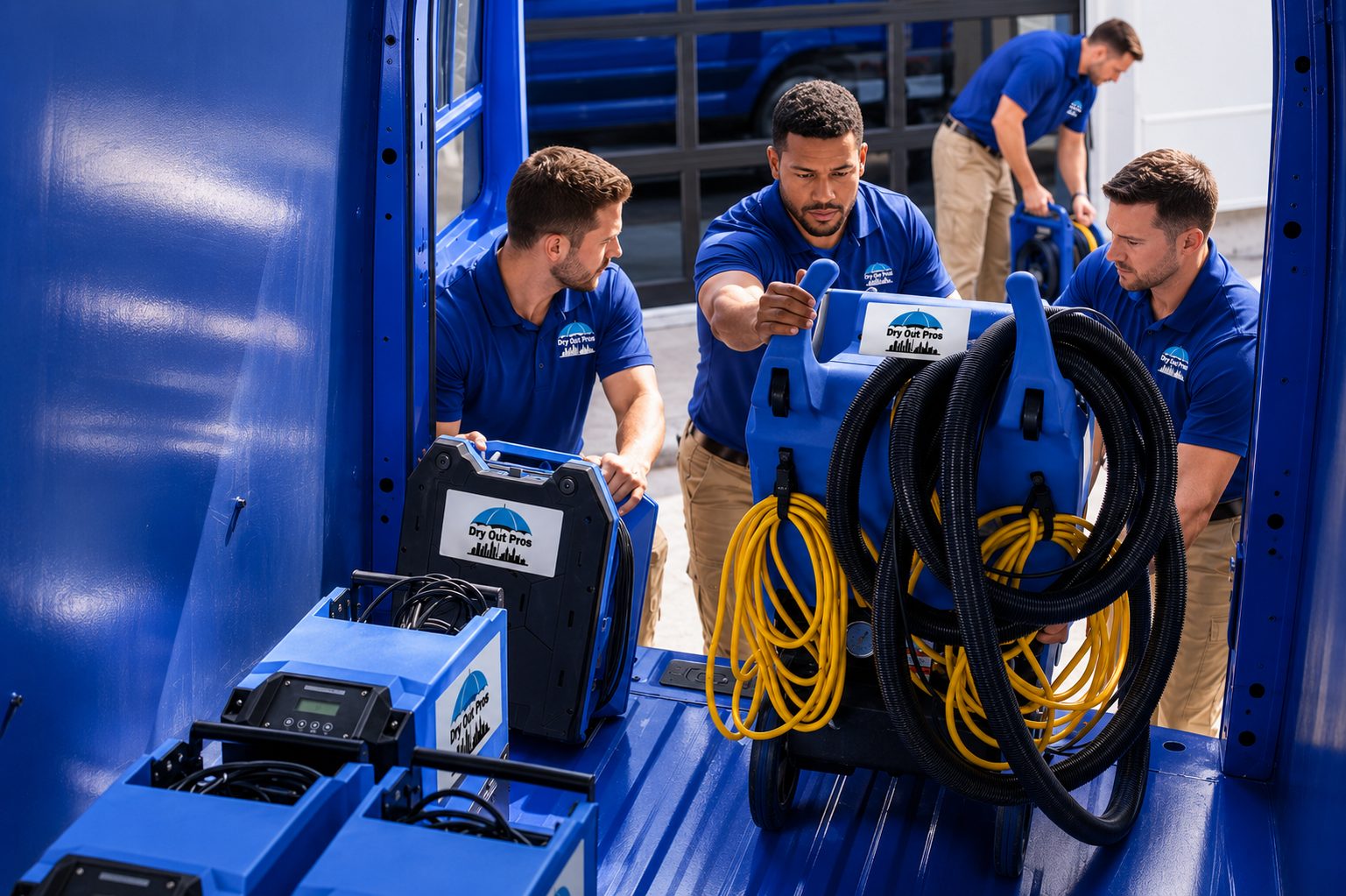
A single unit and a flooded twelve-unit stack need very different equipment counts. We size to the loss rather than sending what happens to be on the truck.
Documentation built to survive adjuster review, so the owner's claim is not reduced over a thin mitigation file.
Properties scattered across Johnson County, Jackson County, the Northland, and outstate markets are all inside our normal service radius.
Property types
Apartment communities and condo associations produce the most water losses of any property type we service, and the most complicated ones. Water rarely stays in the unit where it started.
Condo and HOA losses raise a specific headache: which damage is the association's and which is the unit owner's. We document by unit and by building element so the association, the unit owner, and both carriers can see exactly what was wet where.
Property types
Commercial water losses carry a cost that most residential jobs do not: business interruption. Getting the space dry and operational again is usually worth more than the mitigation itself.
Suites, common areas, server and IT rooms, and tenant improvements. Sensitive-equipment areas get containment priority.
Sales floors, storage, walk-in and kitchen areas. We work around hours where possible to protect revenue.
Clinical spaces with heightened cleanliness requirements and equipment that cannot be exposed to moisture.
Large open volumes needing high-capacity dehumidification, plus inventory and racking protection.
Guest rooms, corridors, and back-of-house, with room-by-room documentation for revenue-loss support.
Institutional buildings with fixed schedules, boards to report to, and tight budgets.
Vendor onboarding
The worst time to vet a restoration vendor is while water is running. Most management companies prefer to have the paperwork done and the account established in advance, so the emergency call is just a call.
Priority accounts get a documented escalation path: who to call, what happens on the first call, what information we need, and what you receive back. Your on-site staff get a one-page card so a maintenance tech at 11 p.m. is not guessing.
There is no cost or commitment to establishing a priority account. Call 1-888-379-6880 or (816) 379-6887 or use the form below, and we will send the vendor packet for your review.
What you get back
Property managers do not just need the work done. They need something to forward.
Response protocol
Property, building, unit, water source, and whether the flow is stopped.
Crew and equipment sized to the reported scope and rolling within the response window.
Affected units mapped, water removed, and the manager notified of actual scope found.
Equipment set, daily readings taken, and progress reported on your schedule.
Complete package delivered for the owner file, the board, or the carrier.
Questions people actually ask
The practical questions that come up during vendor evaluation.
Stacked losses get documented unit by unit rather than as one job. Each affected unit gets its own moisture readings, photo set, equipment record, and scope, so cost allocation between the association, the unit owners, and the carriers is based on evidence instead of estimates. Equipment is sized to the whole affected stack, not one apartment at a time.
Yes. Most of our multi-family and commercial work runs through priority vendor accounts. There is no cost or commitment to setting one up. We provide the COI with your entity as additional insured, W-9, certification documentation, and a one-page escalation card so your on-site maintenance staff know exactly who to call at 11 p.m.
We dispatch 24/7 across the Kansas City metro. Actual timing depends on your location, the weather, and how many jobs are active. We would rather give you an honest window on the phone than a marketing promise. Priority accounts get a documented escalation path so there is no guessing on either end.
Usually, yes. For retail, restaurant, office, and medical spaces we schedule as much of the work as possible outside operating hours and use containment so unaffected areas stay usable. Business interruption is often the largest cost in a commercial loss, so keeping the space open matters more than crew convenience.
No cost, no commitment. Get the vendor packet, an escalation card for your site staff, and a number that answers at 2 a.m. before you actually need it.
24/7 Emergency Response
Tell us what happened, where the property is located, and how urgent it is. For active water damage, call first so response can begin faster.